The First Three Things I’d Automate in a Small Business (and the One I’d Keep Human)
If you run a small business and want to start using AI, start where being wrong is cheap. The three places I’d start are routine customer replies, the documents you don’t have time to read, and the procedures that only live in your head. The one thing I’d keep human: anything that touches money, a complaint, or a fact you’d be on the hook for.
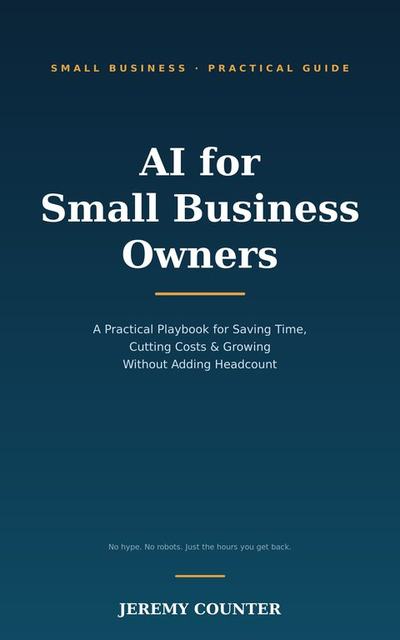
The rule behind all of it is the one from my book AI for Small Business Owners: let the machine handle the words, and you handle the truth. These tools are good at drafting, summarizing and rephrasing. They also state wrong things with total confidence, and that isn’t a bug you can switch off.
How do you find what to automate first?
Before you pick a tool, spend a week writing down every task that takes more than five minutes and isn’t the work a customer pays you for. Then ask two questions about each one: is it repetitive, and is it mostly reading or writing? The tasks that score high on both are your candidates. Pick three. Not ten.
1. Routine customer replies
Inquiry replies, follow-ups, confirmations, the newsletter you keep putting off. Keep a short note of your facts (what you offer, how you price, when you’re available), give the AI three or four of your own past messages so it matches your tone, and let it write the first draft. You fix anything wrong and add the human part. Draft with the machine; send with a person.
2. The documents you don’t have time to read
Vendor proposals, policies, leases, long email threads. Ask for a plain-language summary and anything that looks unusual, or ask it to act as a skeptical reviewer: what isn’t this document telling me? The summary tells you which parts to read in full. It isn’t legal advice, and anything you sign still gets a real read. And don’t paste in anything confidential until you know how the tool handles your data.
3. The procedures that only live in your head
How you open and close, how a certain kind of order gets handled, the checklist for a recurring job. Talk through it in rough notes and let the AI turn that into a clean, step-by-step procedure, then a training guide for the next hire. It’s one of the most useful things you can do with these tools, because it makes the business easier to hand off.
What should you keep human?
Anything involving money, complaints, refunds or apologies, and any fact you’d be responsible for: prices, totals, dates, legal terms. Let AI draft the words around an invoice; let your accounting software do the math. Never let an AI tool move money, send a payment or place an order on its own.
What about the phone?
For trade businesses, the missed call is often the most expensive gap, and it’s the one I built a tool for. At Aurora Information Services I run an AI receptionist that answers in your business’s name, sorts emergencies from routine calls, books into Google Calendar and alerts you. It’s $497 a month, month to month, no contract. If you want a place to start before that, there’s a free Small Business AI Starter Checklist.
AI for Small Business Owners, paperback $9.99 Free AI starter checklist
FAQ
What should a small business automate with AI first?
Repetitive, low-stakes writing and reading: routine customer replies, document summaries, and written procedures. Start where a mistake is cheap to catch.
What should a small business not automate with AI?
Anything that moves money, handles complaints or refunds, or states facts you are responsible for, like prices, totals and legal terms. Keep a person in charge of those.